What is a foreign trade product traceability system? What advantages can it bring to a factory?
In today's increasingly competitive global trade environment, "compliance," "reliability," and "transparency" have become core criteria for overseas customers when selecting suppliers. For foreign trade factories, the key challenge is how to make customers thousands of miles away believe in product quality and recognize production capabilities—this is the key to breaking through order bottlenecks. The foreign trade product traceability system is precisely the core tool to solve this pain point. It not only enables full-process product traceability but also helps foreign trade factories build differentiated advantages, helping them secure more overseas orders and enhance brand competitiveness.
Many foreign trade factories have misconceptions about product traceability systems, thinking "it's just a scanning tool" or "there's no need to invest." However, in reality, a professional foreign trade product traceability system can bring tangible value to factories from four dimensions: customer acquisition, deal closing, repeat purchases, and brand building. Today, we will explain in plain language: what is a foreign trade product traceability system, and what irreplaceable advantages it can bring to foreign trade factories.
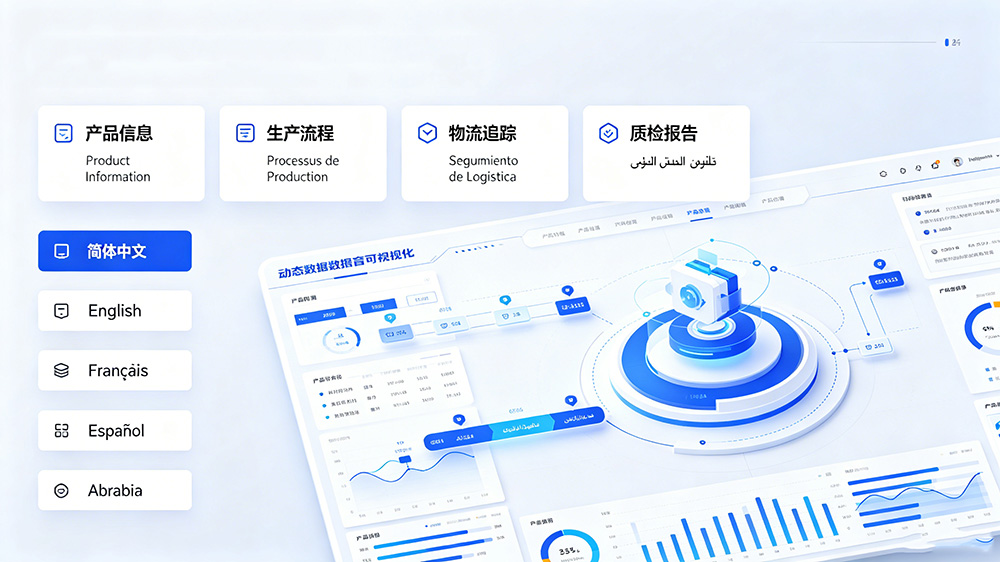
1. Plain Language Explanation: What is a Foreign Trade Product Traceability System?
Simply put, a foreign trade product traceability system is an intelligent system based on "one product, one code" (each product corresponds to a unique QR code/barcode) that enables full-process information query and traceability of products from "production source" to "end customer." It breaks the pain point of "information opacity" in traditional foreign trade, allowing overseas customers to clearly view the full lifecycle information of products through simple scanning, establishing trust in products without the need for on-site inspections.
Unlike ordinary traceability systems, the foreign trade product traceability system is specifically customized for foreign trade scenarios, with core features adapted to overseas customer usage habits and compliance requirements. It mainly includes 3 core functions, balancing practicality and convenience:
1. Full-process traceability: Covers all stages including product production, inspection, packaging, logistics, and customs clearance. Information for each stage (such as production batches, inspection reports, production workers, logistics trajectories, customs clearance documents, etc.) can be entered into the system in real-time. Customers can view it by scanning the code, achieving "source traceable, destination trackable, responsibility identifiable."
2. Multi-language adaptation: Supports mainstream foreign trade languages such as English, Spanish, German, and French. Overseas customers can easily view traceability information without translation, catering to the usage habits of customers from different countries and improving customer experience.
3. Independent website integration: Can be directly connected to the foreign trade factory's independent website. When customers view product details on the independent website, they can scan the code for traceability with one click, without jumping to third-party platforms. This not only improves convenience but also enhances the professionalism of the independent website, helping with Google SEO indexing and customer conversion.
Let me give a straightforward example: A foreign trade hardware factory affixes a dedicated traceability code to its products. When overseas customers receive the goods, they can scan the code to view the product's raw material procurement channels, production procedures, quality inspection reports, factory delivery dates, logistics information, and even see real-time monitoring clips of the production workshop—this "transparency" is precisely the core demand that overseas customers value most.
2. Core Advantages: What Actual Value Can a Foreign Trade Product Traceability System Bring to Factories?
For foreign trade factories, investing in a traceability system is not an "extra expense" but a "precise investment." It can directly solve the pain points of "difficult customer acquisition, weak trust, and serious homogenization competition" for factories. Each advantage can be directly linked to orders and profits, which can be divided into 5 points, each catering to the actual operational needs of factories:
1. Break Trust Barriers, Improve Customer Recognition, and Increase Inquiry Conversion Rate
The biggest pain point in foreign trade transactions is "information asymmetry." Overseas customers cannot conduct on-site inspections of factories or verify whether product quality meets standards and production is compliant. They can only judge through samples and pictures, which easily leads to doubts, resulting in low inquiry conversion rates and order loss.
The product traceability system is like giving customers a "visualized quality commitment." By scanning the code, customers can directly view the full-process information of products, especially core content such as inspection reports and compliance certificates, which can quickly eliminate concerns about "substandard product quality" or "unknown sources," establishing trust in the factory. Compared with competitors without traceability systems, your factory will be more competitive, customers will be more willing to choose you, and the inquiry conversion rate can directly increase by over 30%.
For example, for factories producing foreign trade food, cosmetics, and electronics, traceability systems are even more essential—overseas markets have extremely high compliance requirements for such products. With a traceability system, they can directly prove that products comply with importing country standards, easily pass customs inspections, and also reassure customers for purchasing.
2. Build Differentiated Advantages and Escape Price-based Internal Competition
Currently, many foreign trade factories are caught in the predicament of "price-based internal competition." Everyone sells similar products and uses similar promotion methods, only able to compete for orders by lowering prices, with profit margins being continuously compressed. The product traceability system can help factories break out of internal competition and build unique differentiated advantages.
While competitors are still competing on "low prices," your factory can attract customers through "transparent traceability"—overseas customers are more willing to pay higher prices for "reliable, compliant, traceable" products. This not only improves product premium pricing but also helps factories escape the vicious cycle of price competition and achieve higher profits.
For example, among two foreign trade hardware factories, one with a traceability system allows customers to see the quality of raw materials and production processes; the other without a system means customers can only judge by guessing—obviously, the former can gain more customer favor. Even if the quote is slightly higher, customers are willing to accept it.
3. Reduce Communication Costs and Improve Operational Efficiency
Customer service representatives at foreign trade factories must handle a large number of customer inquiries every day. Most of these are repetitive questions like "how is the product quality," "what is the production process," "are there inspection reports," which consume significant time and labor costs, resulting in low efficiency.
With the product traceability system, customer service can directly guide customers to scan the code to view relevant information, without repeated explanations or sending inspection reports, greatly reducing repetitive communication and saving labor costs. This allows customer service to focus their energy on following up with high-potential customers and closing orders. At the same time, the system can automatically record customers' traceability viewing history, enabling factories to quickly understand customer concerns and follow up and maintain relationships in a targeted manner, further improving operational efficiency.
4. Avoid Foreign Trade Risks and Improve Compliance Capabilities
Overseas markets have increasingly strict compliance requirements for imported products. Once products do not meet standards, they may face risks such as customs detention, fines, and returns, causing huge losses to factories. The foreign trade product traceability
Online Inquiry
If you are interested in this product, please fill in the form below and we will contact you soon